
There is a part in Alice in Wonderland where her math is all gibberish - she says 9 + 9 = 10 or something like that; the crazy thing I just learned is that she was right - she's just using a base 18 decimal system.
Why do we use base 10? Some cultures have used base 12, the number of knuckles on the human hand, base 20, even base 60... in our decimal system, we have 10 named numbers and all others are a combination of those. 1-9, then 10 is really just (1 x 10) + 0. "10" isnt a number, it's a code.
In Alice's case the concept of 18 (9 + 9) is represented by "10", because in a base 18 system 10 is code for (1 x 18) + 0.
crazy.
I'm reading this book The Golden Ratio: The Story of Phi, the World's Most Astonishing Number which is a tangential romp through the history of numbers and I love it.
Friday, December 21, 2007

Thursday, December 20, 2007
the importance of Santa
Why do childhood myths like Santa have such sticking power? People talk about the duplicity of it, speculating that we are misleading our children, etc... But I've come to believe that these childhood myths, the ones that are clearly false to older people, play a crucial role in developing critical thinking ability. The process of discovery is the first exercise of a crucial skill: the ability to see through the popularly accepted truth. It's interesting that Christians caught up in the perverse and corrupt middle-ages' Catholic hierarchies and politics probably originated many of them.
just a thought for this morning.
just a thought for this morning.
Monday, November 12, 2007
coming back soon
I've been gone from this project for a while, pouring every ounce of myself into portfolio, essay, and paperwork for grad school. I can't believe I am so far behind. Soon, I will be back posting rants and random stuff.
Tuesday, September 11, 2007
Wednesday, September 5, 2007
national service- time mag/charlie rose
Right now, I'm watching a totally inspiring Charlie Rose with Jeffrey Sachs, Richard Stengel & Caroline Kennedy talking about the upsurge in our generation's public service (the "9/11 generation"). The subject totally makes me optimistic about restoring our culture, maybe we aren't 'late Rome' quite yet. From companies having trouble hiring without charitable efforts to the peace core, it's fantastic.
I'm also watching Richard Stengel pitch this totally lecherous scheme for politicians to feed off the vitality of these charitable efforts to promote their own campaigns and sneak their fingers into the public service cookie jar. Just the idea of political fingers still wet from back-room deals all over something so pure, innocent, and true, I cant stomach it. If I could think of anyone less deserving... they'd give my the heebies too.
I'm also watching Richard Stengel pitch this totally lecherous scheme for politicians to feed off the vitality of these charitable efforts to promote their own campaigns and sneak their fingers into the public service cookie jar. Just the idea of political fingers still wet from back-room deals all over something so pure, innocent, and true, I cant stomach it. If I could think of anyone less deserving... they'd give my the heebies too.
Thursday, August 30, 2007
systemic racism in standardized testing
more evidence that separating people statistically by race reinforces racism, in far more serious ways than its results could ever make up for.
This is intuitively obvious, but some people are just too thick.
This is intuitively obvious, but some people are just too thick.
Wednesday, August 29, 2007
Ron Paul, political outsider, shakes up prez. race
Ron Paul's giving the mainstream a shake-up; is he too much of an outsider to make a difference? will he split the republican vote? or the Democrat vote?? He's not just saying what people want to hear, he's saying what people believe, what real American Conservatives believe but mainstream news won't report.
Plus, both his names are monosyllabic first names.
Tuesday, August 21, 2007
the biggest mistake ever
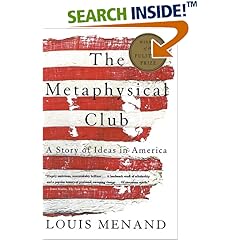
I'm reading this book, The Metaphysical Club, which has a totally pretentious t
 itle but is just about American History, and I'm thinking about the French Revolution and how it was totally f*d, esp. after seeing Simon Schama's The Power of Art on PBS about the painting "the death of marat" and I came to a terrible hypothesis.
What if the American Revolution is responsible for the hundreds of bloody, miserable, terrible failed revolutions which have swept Europe and the third world during this century? Have we, by not loudly clarifying what actually happened in our own history, tacitly provided the groundwork for bloodshed and terror?
What did happen here that was right? Why have other cultures failed, even ones outwardly more civilized and culturally accomplished than ourselves, such as France? The crucial distinction is that Americans were defending an existing civilization against arbitrary rule. Ours was a formality, a political revolution. The French sought to reform their society, it was a cultural revolution. The French were destroying an existing civilization to set up a new one. It tore them to shreds and a lesser people wouldn't have survived- in fact, less cohesive civilizations everywhere have not.
A revolution has never created a free and just society. that world must exist, however repressed, and must be strong and resilient enough to withstand the shock of war and the ensuing power-grab that is inevitable in the wake of overthrows and depositions. A revolution can only free the underlying society - often when that is not strong enough, something much more terrible is unleashed.
We are at fault for not sharing this information that we are so close to- and it is never said; maybe we are too close to it to see. But our laziness has inspired not only the French, but countless (well I'm not going to count them, at least) revolutions in the name of 'freedom' and 'the people'. Unfortunately, almost all have been the French model, a revolution to spontaneously generate a fair and just society, I do not know of an instance of a vibrant and strong existing society throwing off its oppressors - maybe Iran? but they seem a little delusional lately...
It all comes down to the fundamental building block of society- trust, between neighbors, friends, colleagues, strangers - our revolution was to defend that trust, cultural revolutions break it in order to remake them in some ideal way. The most eminent intellectuals and philosophers or strongest political leaders and orators will never be able to create that trust, it is made every day by you and me.
Monday, August 20, 2007
the lives of men, cont'd
How many people are out there, wandering around, maybe far away or maybe just a mile or two, that you rarely see and yet are so important to you? There are probably a dozen people out in the world that I continue to count as my best friends, people I value the most but maybe haven't seen in years - but if I saw them tomorrow it would be like no time had passed. The obstacles between us - oceans or busy schedules - do not lessen the bond between us; I am sure it's true both ways. This is something, it seems, particular to the lives of men, and a lot of girls have a hard time with. I wish I could explain that, even if we don't hang out every week, or talk about every detail of our lives, you still mean as much to me as the day we left. I hope that's true of you, too.
So, basically, don't worry if I don't like to talk on the phone.
So, basically, don't worry if I don't like to talk on the phone.
Thursday, August 2, 2007
the right to privacy?
What is this right to privacy, and where did it come from? I ask non-rhetorically. At what point did this arise? Maybe a reaction to the shock & shame of realizing what we had done re: Japanese internment? Or, what? In a democratic society, assuming individuals are free, where no God is allowed judgment over another's followers and no despotic organization dictates our actions and rations our opinions, who is to judge? Perhaps this mantra is the fruition of the hippie generation's "don't judge' attitude, as well as their willingness to obscure the truth as long as it attains what they feel is a greater good. No founding father obsessed over the right to privacy, and I speculate that no upstanding Athenean ever did either - although I wonder about the state of the idea in the hedonism of the rotten & crumbling late Roman Empire, I suspect they were a bit more concerned about it as well.
So, what are all these people hiding? Why demand this "right" that hasn't got much historical root, or even social justification? If an act must be kept private, either those that might see it could be rightfully suspected of using the knowledge of that act in an immoral way (blackmail, etc), or the act itself is immoral. Boomers don't believe they have ever done anything immoral, so the first condition must be the guilty party.
Im my humble opinion, this obsession with privacy represents an abandonment of civic life, of democratic and free discussion, a statement that one's neighbors' opinions have no bearing on one's own- a contradiction of democracy itself.
If you are so just, why not share your justice as an example to your fellow citizens?
So, what are all these people hiding? Why demand this "right" that hasn't got much historical root, or even social justification? If an act must be kept private, either those that might see it could be rightfully suspected of using the knowledge of that act in an immoral way (blackmail, etc), or the act itself is immoral. Boomers don't believe they have ever done anything immoral, so the first condition must be the guilty party.
Im my humble opinion, this obsession with privacy represents an abandonment of civic life, of democratic and free discussion, a statement that one's neighbors' opinions have no bearing on one's own- a contradiction of democracy itself.
If you are so just, why not share your justice as an example to your fellow citizens?
to clarify....
just to clarify.... i cited my dad's youth as a contrast to my own & not to hold him up as an example of the bmw/mcmansion type. He's an enormously creative mind whose depth & breadth (& generosity & patience,- things that bear directly on our relationship!) I don't think I have ever encountered in annother, and I doubt I ever will.
Saturday, July 28, 2007
the lives of men
MY FATHER WAS NEVER A BACHELOR. Not for a single day. Even before he had finished school, he was a husband, and soon after, a father. That's the way it was back then, except his brothers and sisters didn't do exactly the same, in fact many of his generation floundered for years. Lots of people do it today, too, so saying "thats the way it was back then" is not quite right.
Lives can be clear-cut, if not easy. Lives can be so given to others that the fickle passions of your own soul are easily subordinated, if not easily suppressed.
work and war. In peace, men are expected to give their lives to work, 40+hours a week, forThere is so much expected of a man, but really, it can be miserably concentrated in 2 words: other people's money, for other people's dreams, in war, the same, just much more tragically, heroically - either way, literally. We no longer hope our young men become pillars of the community, strong and wise elders, renaissance men. The only measure of a man is his ability to earn money. That sultry redheaded cartoon babe from Roger Rabbit (well, probably someone else before her) summed up the lot of 20th century man: "get out'a here, get me some money, too"...
Truthfully, there are many who fit this role well enough. A BMW, McMansion, a golden retriever and a cape house for a loving family is enough to satisfy many, for whom the bulk of their time would be spent unproductively if it were free. No pulsing demand to be shoulders-deep in the world haunts them, no deep and pounding desire to be a part of the global debate, the ebb and flow of ideas that ultimately determines weather the world is still safe for golden retrievers, and still produces an abundance of BMWs.
This life, however, born of the industrial revolution which pulled us off our farms and erased the cyclical nature of labor, reducing men to time and labor, only as good as their last quarterly report, is a recipe for decline- in fact, it is decline itself. We see ourselves as a rocket ship, but are we not merely a well-designed arrow, having left the source of our power far in the past? We are a nation born of the Renaissance, the Enlightenment, where each citizen was to be full and complete, independent and autodidactic, a true democracy where society is the sum of the thoughtful and cooperative contribution of it's demos. Now, thoughtful contributions are cast a wary eye, not just unexpected but undesired, preempted or usurped by the greedy financial tentacles of the political/bureaucratic monster, like the Sea-Witch from the Disney classic. Now we live in a democracy of statistics, of numbers of votes, where the demos is some grotesque larval beast who's hedonistic demands must be met to placate it, keep it inactive and call attention away from the back-room wrongs and corrosions of the very structure that supports it.
At the same time, some men are totally free, well-financed, perusing a plurality of passions that we are told is impossible in a single life time, we are only one kind of cog. Matt Damon grins wholesomely from behind titles and captions on the cover of this month's GQ. What if there is some great love that you can't push aside? What if there are many?
The lives of modern men can be terribly proscribed, but I believe we were never meant to live this way. We may not be birds of flight, but we are not meant to be beasts of burden - we were born to fly.
Lives can be clear-cut, if not easy. Lives can be so given to others that the fickle passions of your own soul are easily subordinated, if not easily suppressed.
work and war. In peace, men are expected to give their lives to work, 40+hours a week, forThere is so much expected of a man, but really, it can be miserably concentrated in 2 words: other people's money, for other people's dreams, in war, the same, just much more tragically, heroically - either way, literally. We no longer hope our young men become pillars of the community, strong and wise elders, renaissance men. The only measure of a man is his ability to
earn money. That sultry redheaded cartoon babe from Roger Rabbit (well, probably someone else before her) summed up the lot of 20th century man: "get out'a here, get me some money, too"...Truthfully, there are many who fit this role well enough. A BMW, McMansion, a golden retriever and a cape house for a loving family is enough to satisfy many, for whom the bulk of their time would be spent unproductively if it were free. No pulsing demand to be shoulders-deep in the world haunts them, no deep and pounding desire to be a part of the global debate, the ebb and flow of ideas that ultimately
determines weather the world is still safe for golden retrievers, and still produces an abundance of BMWs.This life, however, born of the industrial revolution which pulled us off our farms and erased the cyclical nature of labor, reducing men to time and labor, only as good as their last quarterly report, is a recipe for decline- in fact, it is decline itself. We see ourselves as a rocket ship, but are we not merely a well-designed arrow, having left the source of our power far in the past? We are a nation born of the Renaissance, the Enlightenment, where each citizen was to be full and complete, independent and autodidactic, a true democracy where society is the sum of the thoughtful and cooperative contribution of it's demos. Now, thoughtful contributions are cast a wary eye, not just unexpected but undesired, preempted or usurped by the greedy financial tentacles of the political/bureaucratic monster, like the Sea-Witch from the Disney classic. Now we live in a democracy of statistics, of numbers of votes, where the demos is some grotesque larval beast who's hedonistic demands must be met to placate it, keep it inactive and call attention away from the back-room wrongs and corrosions of the very structure that
supports it.At the same time, some men are totally free, well-financed, perusing a plurality of passions that we are told is impossible in a single life time, we are only one kind of cog. Matt Damon grins wholesomely from behind titles and captions on the cover of this month's GQ. What if there is some great love that you can't push aside? What if there are many?
The lives of modern men can be terribly proscribed, but I believe we were never meant to live this way. We may not be birds of flight, but we are not meant to be beasts of burden - we were born to fly.
Thursday, July 19, 2007
the softening of hard hearts
As the voracious efforts of a generation fade and stain with time, as they acquire layers of paint textured with chipping & reapplication, as they shrink demurely behind maturing shrubs and filled-out trees, as their results, methods, and even motives are called into sharper criticism, vulnerabilities are revealed; occasionally the feebleness of a life's efforts, and the hurt of a life's work derided, can be gli mpsed. In others' aggressive criticism I see my own cruelty, and a hard heart is softened.
Their own hard-hearted declarations seem less severe now, the fearful end which has not come, less inevitable. The shells of a passing generation's hopes stand, disdained, resented by their neoclassical neighbors for their lack of decorum and by their deconstructionist children for their lack of vitality and vigor. But the growth of vocalized opposition has dissolved the veneer of authoritarian domination, and our civic efforts and free-market success render their stalinistic likenesses sheepish, and our fears of them quaint. Tense severity mellows like in a black-and-white war movie.
The eroding concrete of their physical manifestations reveal the pebbles within, and the dissolution of this stern facade has lain the more resolute elements of the human spirit bare: hope, ambition, confidence, commitment, faith in a dream and the united effort of free individuals to build, literally, what they sincerely thought was a better world, a better future for all. The rudeness of the Brutalist concrete, in the presence of this revealed humanity, mellows and a humble texture comes into focus, a timelessness of mass, a pleasant tectonic weight which we are increasingly denied in favor of curtain walls and flying steel with hollow stone veneer. Expansive plate-glass speaks more, now, to selflessness - the greatest expense is invisible, its only function to keep us warm and dry while revealing the world outside - it is utterly about the 'other'. Their heavy steel mullions, warmed by layers of paint, are reassuring - quaint in an age where mullions are optional. All in all, these structures remind me of my childhood classrooms, open to the sky, spacious and modest.
After a century, on a safe and warm afternoon, these old concrete heaps stand steadfast but humbled behind veils of cherry blossoms and dogwoods, as testament to our forebearers who stood strong amidst global disaster and imagined a hopeful future, a clean, clear, affordable, charitable future. They are monuments to hope in a world we, thankfully, will never have to face.
When I think of City Hall, I think of many things - the corbusian predecessor which it falls far short of, it's origins in an open competition heralding a return of transparency and fairness in Boston politics, the impression of some aging soviet beauty queen who has lived to regret her disdainful shunning of her common neighbors, still to proud to reconcile in the face of her demise. But when the warm afternoon sunshine hits it just right, I am reminded
 of that wonderfully grumpy old pile of stones, the Palazzo Vecchio, that presides over Florence as a trophy of democracy. Let the old girl live, it takes time for hard hearts to soften.
mpsed. In others' aggressive criticism I see my own cruelty, and a hard heart is softened.Their own hard-hearted declarations seem less severe now, the fearful end which has not come, less inevitable. The shells of a passing generation's hopes stand, disdained, resented by their neoclassical neighbors for their lack of decorum and by their deconstructionist children for their lack of vitality and vigor. But the growth of vocalized opposition has dissolved the veneer of authoritarian domination, and our civic efforts and free-market success render their stalinistic likenesses sheepish, and our fears of them quaint. Tense severity mellows like in a black-and-white war movie.
The eroding concrete of their physical manifestations reveal the pebbles within, and the dissolution of this stern facade has lain the more resolute elements of the human spirit bare: hope, ambition, confidence, commitment, faith in a dream and the united effort of free individuals to build, literally, what they sincerely thought was a better world, a better future for all. The rudeness of the Brutalist concrete, in the presence of this revealed humanity, mellows and a humble texture comes into focus, a timelessness of mass, a pleasant tectonic weight which we are increasingly denied in favor of curtain walls and flying steel with hollow stone veneer. Expansive plate-glass speaks more, now, to selflessness - the greatest expense is invisible, its only function to keep us warm and dry while revealing the world outside - it is utterly about the 'other'. Their heavy steel mullions, warmed by layers of paint, are reassuring - quaint in an age where mullions are optional. All in all, these structures remind me of my childhood classrooms, open to the sky, spacious and modest.
After a century, on a safe and warm afternoon, these old concrete heaps stand steadfast but humbled behind veils of cherry blossoms and dogwoods, as testament to our forebearers who stood strong amidst global disaster and imagined a hopeful future, a clean, clear, affordable, charitable future. They are monuments to hope in a world we, thankfully, will never have to face.
When I think of City Hall, I think of many things - the corbusian predecessor which it falls far short of, it's origins in an open competition heralding a return of transparency and fairness in
Boston politics, the impression of some aging soviet beauty queen who has lived to regret her disdainful shunning of her common neighbors, still to proud to reconcile in the face of her demise. But when the warm afternoon sunshine hits it just right, I am reminded of that wonderfully grumpy old pile of stones, the Palazzo Vecchio, that presides over Florence as a trophy of democracy. Let the old girl live, it takes time for hard hearts to soften.
Wednesday, July 18, 2007
welcome
On the verge of 26, I'm in-between schools, in-between careers, in-between passions, in-between lives. In an effort to maintain my sanity, I've started this page to clear my head of all the random ideas that rattle around, things I think are important but don't share in-between visits home, in-between beers, in-between cookouts, in-between pick-ups & drop offs.
Welcome to my brain dump.
Welcome to my brain dump.
Subscribe to:
Comments (Atom)

 Posts
Posts

